CTR Manipulation in Local SEO: How to Improve in Google Maps
Click-Through Rate (CTR) manipulation refers to the practice of artificially boosting the number of clicks on a search result relative to its impressions, with the goal of influencing search engine rankings.
In a local SEO context – specifically Google’s Local Pack and Google Business Profile (GBP) listings – CTR manipulation means generating or simulating user engagement (clicks, taps, directions requests, etc.) on a local business listing to improve its visibility in local search results.
Local SEO is highly competitive and dynamic. Google's algorithms weigh factors like relevance, distance, and prominence for map pack rankings. CTR has emerged as a key behavioral signal that can amplify prominence. When more users click on a local listing, it signals to Google that the result is relevant and popular.
By faking popularity through CTR manipulation, SEO professionals aim to push a business higher in the local rankings.
CTR is simply the percentage of impressions that result in a click. For example, if a listing is seen 100 times and 20 users click it, the CTR is 20%.
In organic SEO, high CTR often correlates with higher rankings. In local SEO, CTR and engagement metrics (like driving direction clicks or phone calls) are believed to influence local prominence scores.
This white paper provides a comprehensive technical exploration of CTR manipulation for local SEO. We will cover:
- Why CTR matters for local search
- Manipulation techniques
- Automation tools
- Metrics and use cases
- Actionable strategies for improving rankings
Note: This paper focuses on technical execution and observed effects of CTR manipulation. It does not discuss ethical or policy considerations. All discussions are for educational purposes.
Importance of CTR in Local SEO
CTR is not just a vanity metric. In local SEO, it can directly affect a business’s visibility.
When a higher percentage of users click your listing, it sends positive signals to Google that your result is relevant. This can lead to improved rankings in the local pack and Maps results.
Feedback Loop
Better rankings lead to more impressions and clicks. More clicks (especially compared to competitors) can further boost rankings. It becomes a reinforcing cycle.
Local Pack CTR Averages
| Local Pack Position | Avg. CTR (Approx) |
|---|---|
| #1 | 17.6% |
| #2 | 15.4% |
| #3 | 15.1% |
Appearing in the top 3 local results (Map Pack) is critical. A high CTR can help you get there and stay there.
Google Business Profile Insights
User engagement on your GBP listing – clicks to call, request directions, or visit the website – are all tracked. A listing with consistent high engagement appears more prominent to Google's algorithms.
CTR manipulation attempts to artificially inflate these signals to gain a ranking advantage. However, one-time spikes in CTR may not last. Algorithms may eventually filter out anomalous behavior.
Sustainability matters: Campaigns must be continuous or paired with improved UX and reputation.
Technical Breakdown of Manipulation Techniques
CTR manipulation uses various techniques to generate artificial clicks. These range from manual to automated methods:
1. Human Click Farms / Microtasking
- Hire real people via platforms like Microworkers.
- Workers search for a keyword, scroll, find your business, and click.
- Often instructed to dwell or click within the site.
- Realistic, but limited in scalability and expensive.
2. Automated Bots and Emulators
- Tools like Puppeteer or Selenium simulate searches, clicks, scrolls.
- Can mimic mobile devices and geolocation.
- Uses proxies and randomized behavior to evade detection.
- Scalable but higher risk.
3. Google Maps Engagement
- Simulate direct actions in Maps (clicking for directions, calls).
- Sends strong user-interest signals.
- Best when actions come from nearby locations (geo-targeted IPs).
4. Social Engineering and Crowdsourcing
- Ask your audience (via social media, email lists) to search and click.
- Real users generate diverse, authentic-looking engagement.
- Great for short boosts but not scalable.
5. Organic CTR Optimization
- Enhance your title tags, meta descriptions, and use Schema markup.
- Improve GBP listing appearance with images, reviews, posts.
- Increases real user engagement and conversion likelihood.
Blended campaigns using both artificial and genuine tactics yield the best results.
Tools and Automation
Manual CTR manipulation is inefficient. Dedicated tools provide scalability and consistency.
Features to Look For:
- Google search and Maps simulation
- Geo-targeting using proxies
- Automated engagement (website clicks, scrolls, direction requests)
- Analytics dashboards
- Campaign scheduling and pacing controls
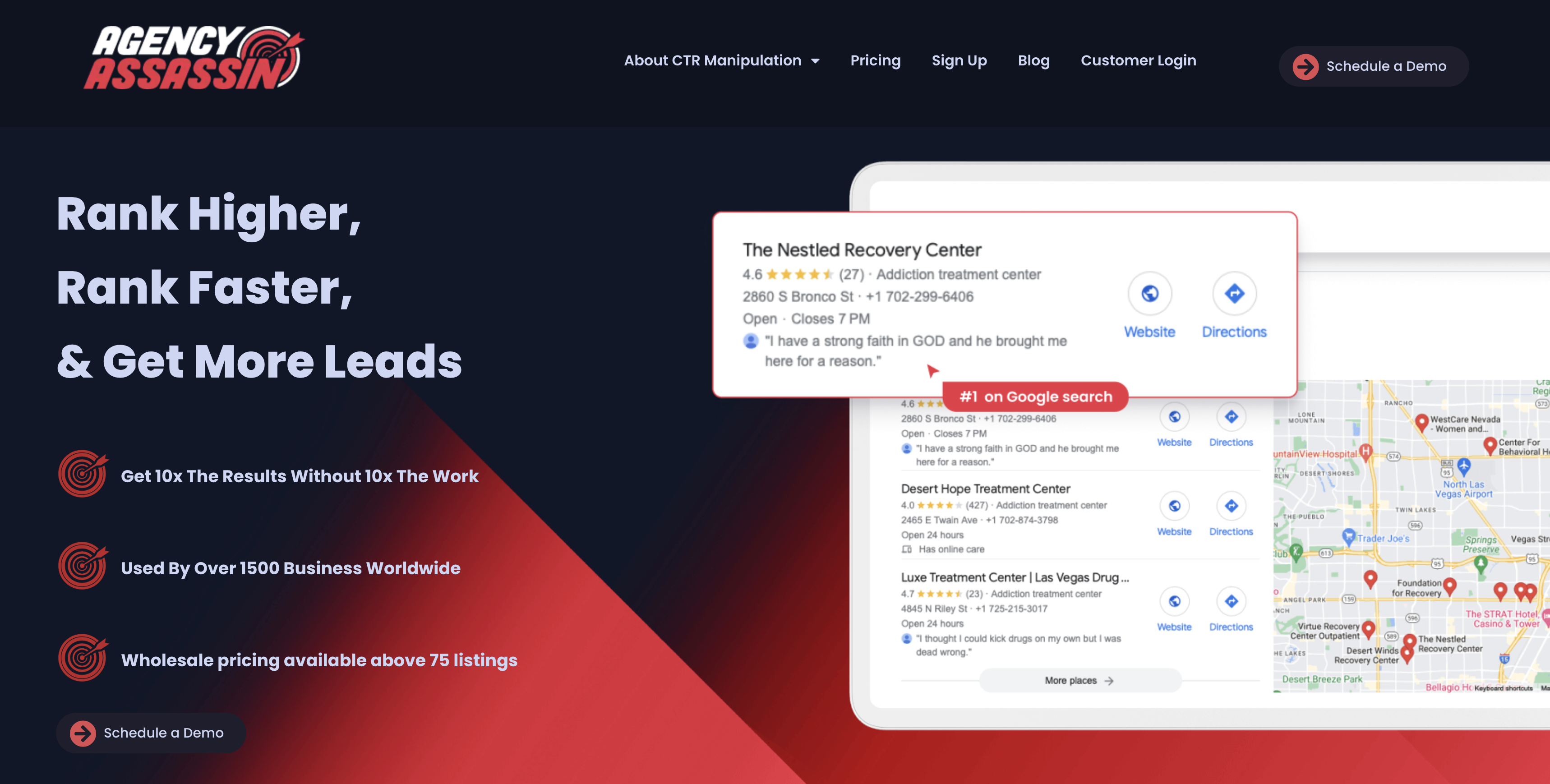
Leading Tool: Agency Assassin
- Web-based CTR automation for local SEO
- Geo-targeted searches with cloud automation
- AI-driven optimization and testing
- Performance dashboards for rank tracking and engagement
Other Tools:
- CTR Booster
- SERP Empire
- CrowdSearch
- Custom bot frameworks (with proxies, GPS spoofing)
Best Practices:
- Use residential/local proxies
- Avoid predictable patterns
- Simulate real user behavior (scroll, dwell, navigate)
- Track all outcomes, not just clicks
::youtube ::
🔗 Read more about Agency Assassin
Impact Metrics to Monitor
To evaluate success, monitor the following:
1. CTR
Track changes in click-through rate for targeted queries. Use Google Search Console, GBP Insights, and 3rd party SEO tools.
2. Local Rankings
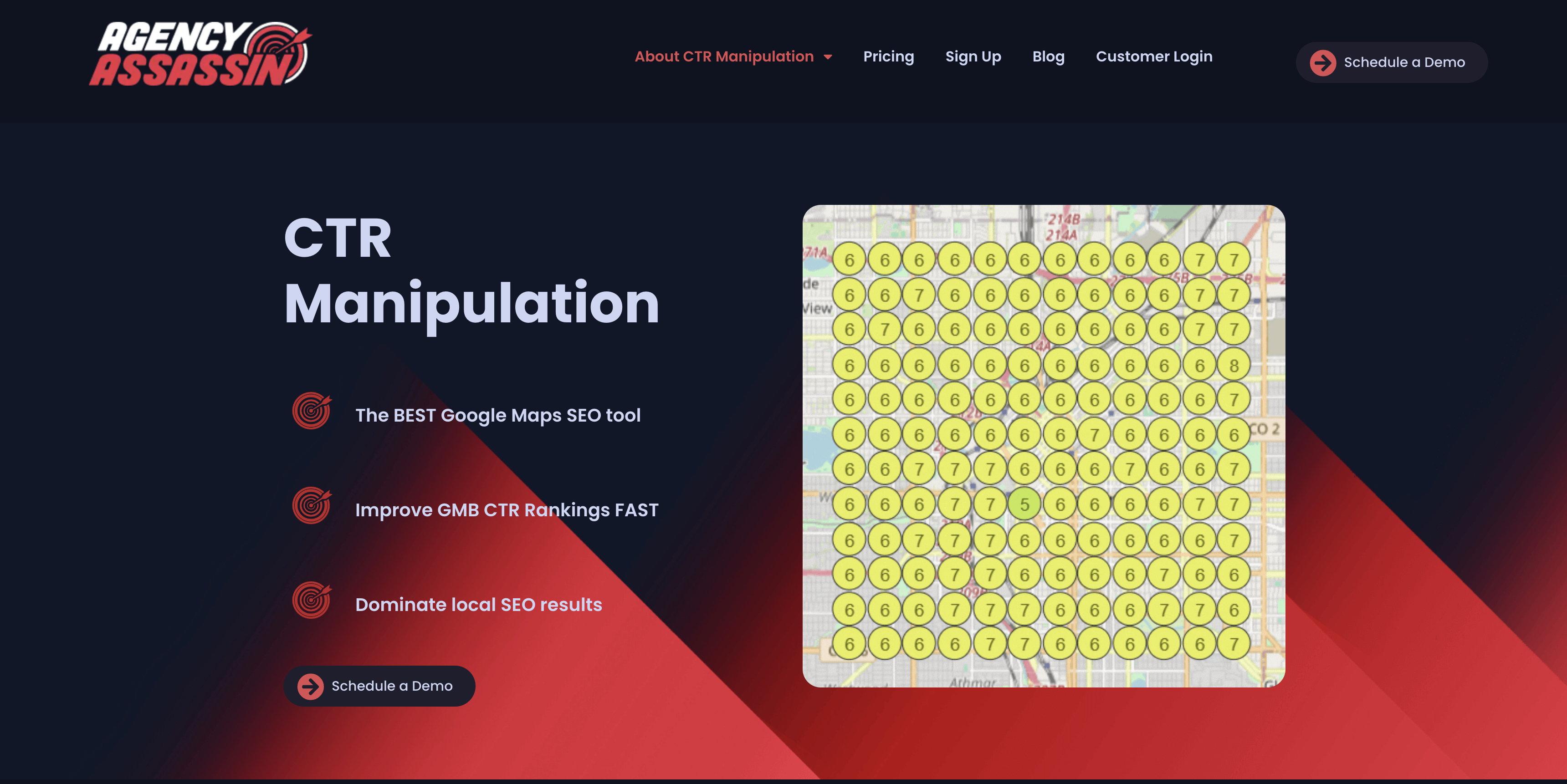
Use rank trackers (e.g., BrightLocal, LocalFalcon) to monitor Map Pack performance. Geo-grid visualizations can help you spot area-specific changes.
3. GBP Engagement Metrics
Monitor:
- Website visits
- Direction requests
- Phone calls
Compare month-over-month to measure growth.
4. Organic Traffic and Conversions
Use Google Analytics to check traffic increases from:
- Organic search
- Maps referrals
Track phone calls, form fills, or other goals.
5. Bounce Rate and Session Duration
Ensure engagement quality remains high. Low dwell time or high bounce may signal poor UX or bad CTR tactics.
6. Review Trends
Improved visibility may generate new reviews. Monitor rating trends as a secondary effect.
Visual Tip: Create a dashboard or spreadsheet tracking all metrics weekly to visualize impact over time.
Case Studies and Use Cases
Restaurant Ranking Boost
- Hovering on page 2 of local results
- Crowdsource CTR campaign pushed it to #2 in 3-pack within a week
- Rankings fell back within a month without sustained effort
Law Firm - Multi-City Boost
- Automated CTR campaigns raised rankings from #5-6 to top 3
- Used geo-targeted proxies and direction request simulations
- Ongoing campaigns maintained rank and reduced churn
E-Commerce + Schema
- Used FAQ + review Schema to improve SERP snippet
- Simultaneously ran CTR campaign
- Gained dual rankings: organic + local pack
New Business Jumpstart
- New GBP used CTR manipulation to get into the Map Pack fast
- Boosted engagement helped gather early reviews and traction
Seasonal Campaign
- HVAC company ran CTR campaign in spring to dominate summer visibility
- Paused in off-season; repeated next year with strong results
Conclusion
CTR manipulation is a powerful SEO lever for:
- Driving visibility in Google Maps and local pack
- Amplifying search impressions and engagement
- Outperforming competitors when paired with solid SEO fundamentals
Action Plan for SEOs
- Optimize GBP and on-page SEO
- Start low-volume CTR campaigns
- Ramp gradually and monitor impact
- Test and refine: vary engagement types, geos, timing
- Use tools for automation and insights, like [Agency Assassin](https://agencyassassin.com)
- Track metrics weekly: CTR, rank, traffic, calls
Final Word
CTR manipulation, when used strategically, can help local businesses climb the ranks and gain an edge. But the key to long-term success is pairing it with real engagement and continued optimization.